On December 11, 2025, OpenAI officially released GPT-5.2. This model is not just a simple upgrade, but a revolutionary model that demonstrates human-expert-level performance in science and mathematics. GPT-5.2 is designed to enable researchers to more efficiently explore ideas, verify hypotheses, and implement discoveries.
Core Change: Unlike previous models, GPT-5.2 has significantly enhanced its 'Thinking' ability to solve complex multi-step logical problems. It particularly excels in mathematical reasoning, precise quantitative processing, and error reduction capabilities.

📊 GPT-5.2 Model Variants and Features
GPT-5.2 is available in three main variants, each optimized for specific use cases:
| Model Variant | Key Features | Target Users |
|---|---|---|
| GPT-5.2 Pro | High-performance reasoning, expert-level tasks | Professional researchers, enterprise users |
| GPT-5.2 Thinking | Multi-step logic, complex problem solving | Mathematicians, scientists, developers |
| GPT-5.2 Instant | Fast responses, general questions | General users, business use |
📈 Remarkable Benchmark Performance
GPT-5.2's performance has been demonstrated across several prestigious benchmarks. It particularly shows overwhelming results in mathematics and science compared to previous models:
| Benchmark | GPT-5.2 Pro | GPT-5.2 Thinking | Previous Best |
|---|---|---|---|
| GPQA Diamond (Graduate-level science) |
93.2% | 92.4% | ~85% |
| FrontierMath (Expert-level mathematics) |
N/A | 40.3% | ~25% |
| AIME 2025 (Competition mathematics) |
100% | 100% | ~80% |
GPQA (Graduate-Level Google-Proof Q&A) is a benchmark that evaluates the ability to answer graduate-level science questions in physics, chemistry, biology, and more. FrontierMath measures expert-level mathematical problem-solving ability with Python tool access. AIME is a high school mathematics competition held in the United States, featuring very difficult problems.
🔍 Detailed Benchmark Analysis
GPT-5.2 showed overwhelming performance against competing models across various evaluation metrics. Detailed analysis by benchmark is as follows:
Software Engineering (SWE-Bench Pro) Performance
GPT-5.2 Thinking showed particularly outstanding performance in the software engineering benchmark, and the performance gap with other models becomes more pronounced as output tokens increase. At 100,000 tokens, it recorded approximately 56% accuracy, showing 4 percentage points higher performance than GPT-5.1-Codex-Max's 52%.
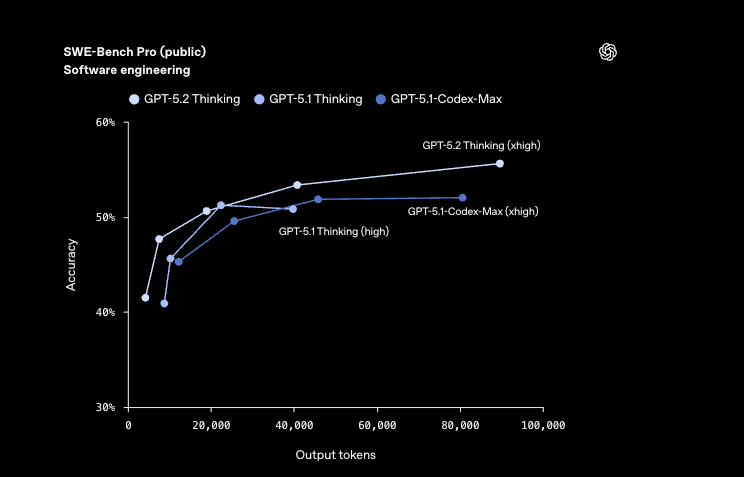
Key Feature: GPT-5.2 shows a tendency to continuously improve performance as output token length increases, with the performance gap with other models becoming particularly apparent above 40,000 tokens. This suggests it can maintain higher accuracy when handling complex software engineering tasks.
Comprehensive Benchmark Performance Comparison
GPT-5.2 showed balanced performance improvements across various fields:

Meaning and Importance by Benchmark
| Benchmark | Evaluation Purpose | Meaning of GPT-5.2 Performance |
|---|---|---|
| SWE-Bench Pro | Real software development environment evaluation | Improved complex code generation and debugging capabilities |
| GPQA Diamond | Advanced science knowledge evaluation (tool use prohibited) | Excellent pure scientific knowledge and reasoning abilities |
| CharXiv Reasoning | Science diagram-based reasoning evaluation | Enhanced visual information and text integrated reasoning abilities |
| FrontierMath | Expert-level mathematical problem solving | Superior advanced mathematical reasoning abilities over competing models |
| AIME 2025 | Mathematics competition problem solving | Demonstrated perfect mathematical reasoning abilities |
| ARC-AGI | Abstract reasoning ability evaluation | Excellent complex pattern recognition and problem solving abilities |
| GDPval | Real business environment knowledge tasks | Greatly improved practical problem solving abilities |
Notable Points: GPT-5.2 recorded 100% on AIME 2025, and particularly in the ARC-AGI-2 benchmark recorded over 3 times higher score than GPT-5.1 (52.9% vs 17.6%), and showed 32.1 percentage points higher score in GDPval (70.9% vs 38.8%). This means GPT-5.2's abstract reasoning ability and applicability in real business environments have greatly improved.
💡 Practical Examples for Beginners
Let's look at how GPT-5.2's powerful features can be applied to actual tasks through some examples. These examples are designed to be easily followed even by beginners. The test environment for this blog used the VS Code extension coding assistant, Cline.
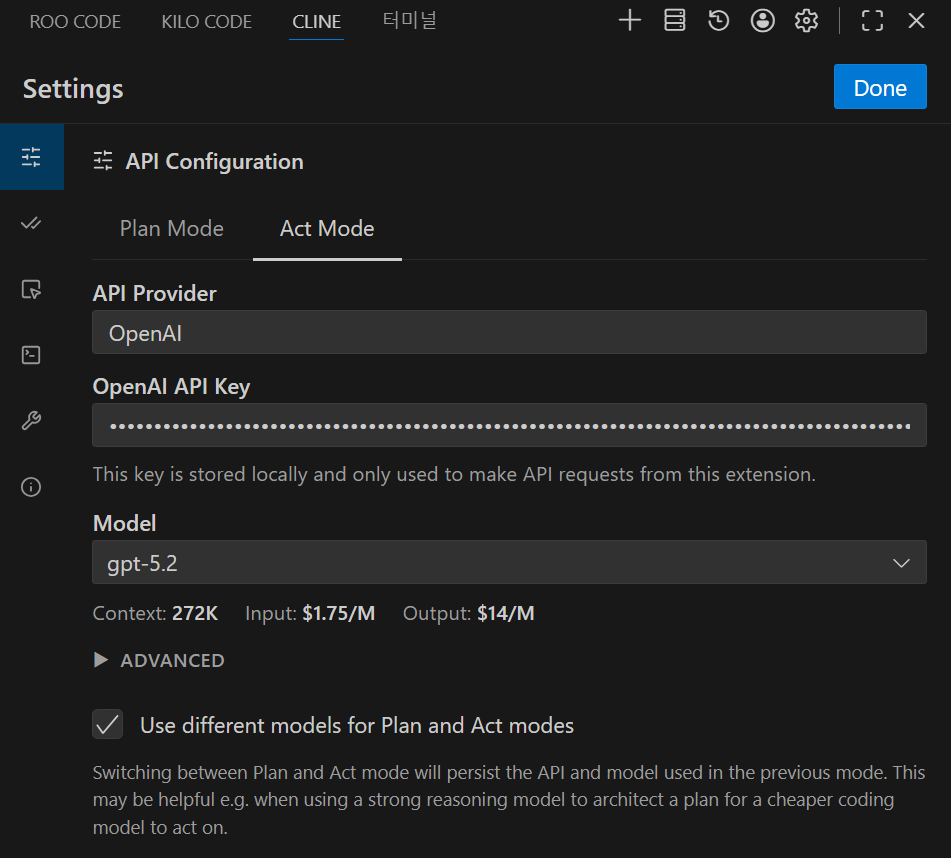
Example 1: Solving Complex Math Problems
Using GPT-5.2's 'Thinking' mode, you can solve complex math problems step by step. Here's an example of solving a calculus problem:
# User prompt
"Find the extrema and critical points of the function f(x) = x³ - 6x² + 11x - 6,
and draw the graph of the function. Please explain each step."
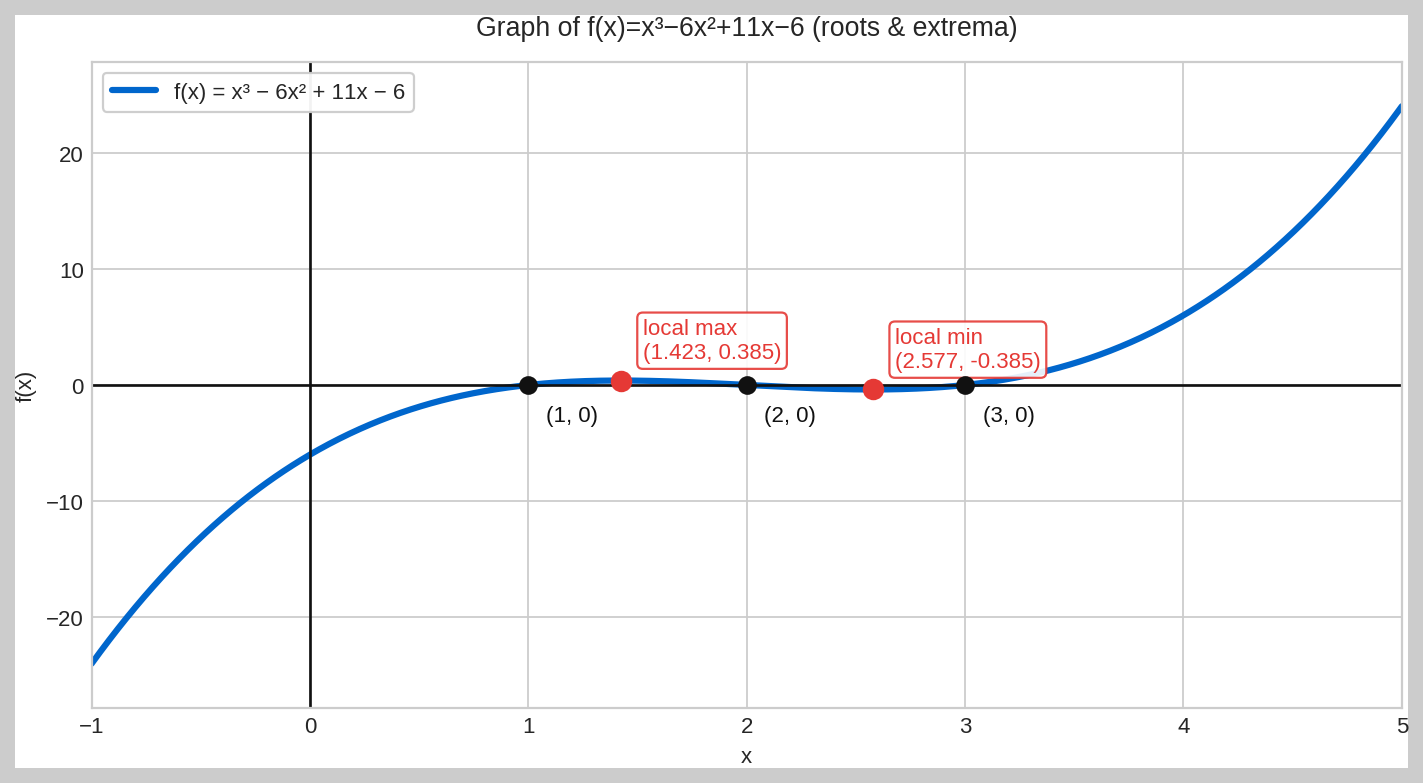
As shown, GPT-5.2 can break down complex math problems step by step and explain each step clearly. This greatly helps students understand the problem-solving process.
Example 2: Scientific Data Analysis
GPT-5.2 also shows excellent ability in analyzing experimental data and verifying statistical significance. Here's an example of experimental data analysis:
# User prompt
"Analyze the following experimental data and determine if the results are statistically significant.
Group A: [23.5, 24.1, 22.8, 25.2, 23.9]
Group B: [26.7, 27.3, 25.9, 26.5, 27.1]"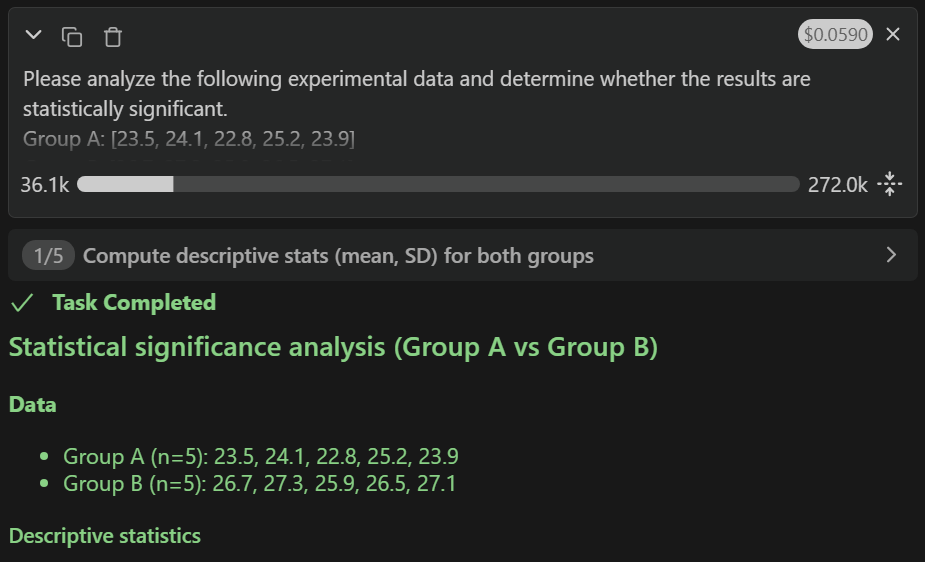

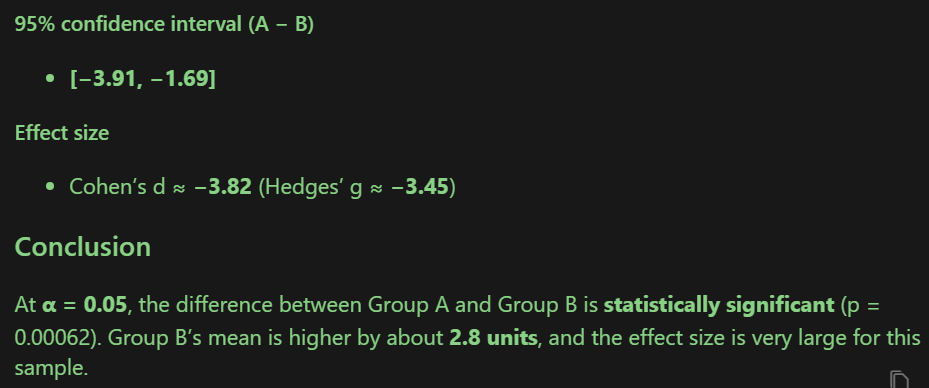
In this example, GPT-5.2 doesn't just provide answers like a calculator, but explains statistical concepts and guides the hypothesis testing process step by step. This helps researchers interpret results and plan next steps.
💻 Coding and Developer Applications
GPT-5.2 shows revolutionary performance not only in science and mathematics but also in coding. It particularly excels in complex software engineering tasks.
| Benchmark | Performance Score | Meaning |
|---|---|---|
| SWE-bench Verified | 80% | Software engineering expert level |
| SWE-Bench Pro(multilingual) | 55.6% | Complex multilingual projects |
| Tau2-bench Telecom | 98.7% | Complex workflow adjustment |
Coding Example: Data Visualization
Using GPT-5.2, you can easily generate complex data visualization code. Here's a Python code example for visualizing scientific data:
# User prompt
"Please write Python code to visualize experimental data.
The data consists of measurements from two groups:
Group A: [23.5, 24.1, 22.8, 25.2, 23.9]
Group B: [26.7, 27.3, 25.9, 26.5, 27.1]

Visualize the mean and standard deviation of each group,
and create a graph showing whether there is a statistically significant difference."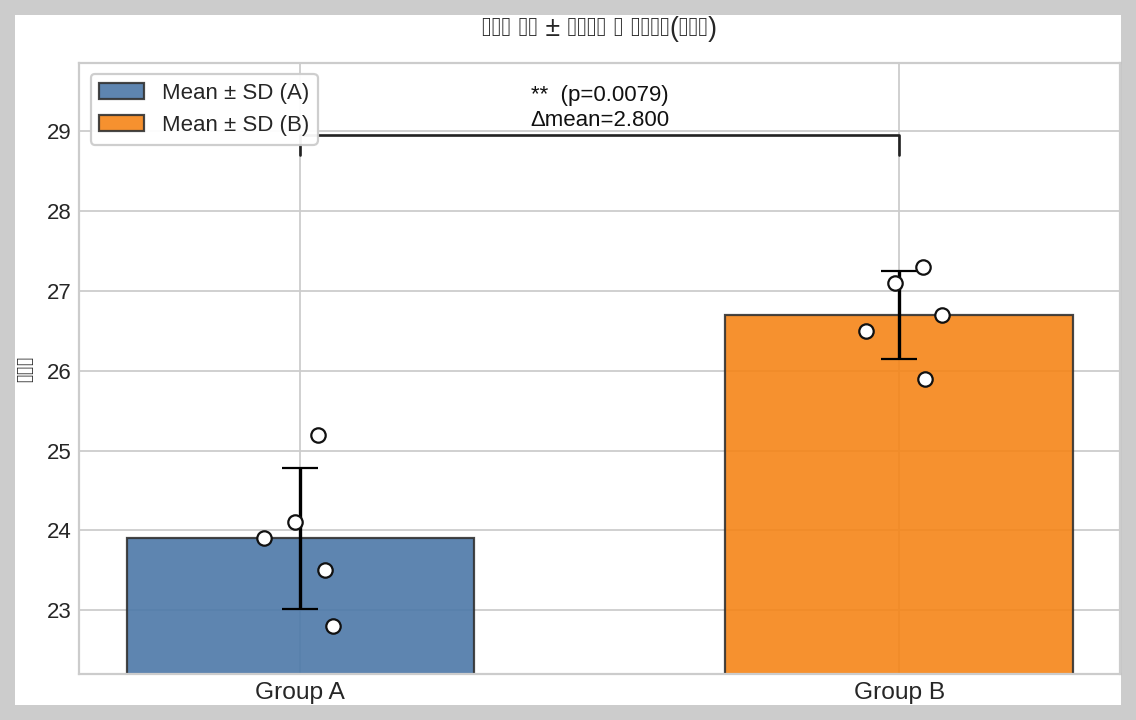
This code goes beyond simply plotting data, combining statistical analysis with visualization. GPT-5.2 selects appropriate libraries, applies statistically valid visualization methods, and even generates code to interpret the results.
🎯 Conclusion: A New Era of Scientific Research
GPT-5.2 is more than just an evolution of language models; it's an important milestone that demonstrates human-expert-level reasoning abilities in science and mathematics. With the advent of this model, researchers can now move beyond repetitive tasks and focus on more important discoveries and insights. The performance GPT-5.2 shows in mathematical reasoning, scientific hypothesis verification, and complex data analysis is at a level incomparable to previous models. This is an important step toward artificial general intelligence (AGI) and has the potential to fundamentally change the way scientific research is conducted.
I recommend you try using GPT-5.2 yourself and experience firsthand how it helps with solving scientific and mathematical problems. I will return next time with more useful AI technology information. Thank you.

🤖 GPT-5.1 vs Gemini 3.0 vs Claude Opus 4.5: A Practical Comparison of Real-World Coding Performance
Recent advancements in AI technology are truly remarkable. Major AI companies have almost simultaneously released their latest coding models. OpenAI introduced GPT-5.1 and GPT-5.1-Codex-Max, Google unveiled Gemini 3.0, and Anthropic presented Claude Opus 4
fornewchallenge.tistory.com


